
Lower Body Thermography
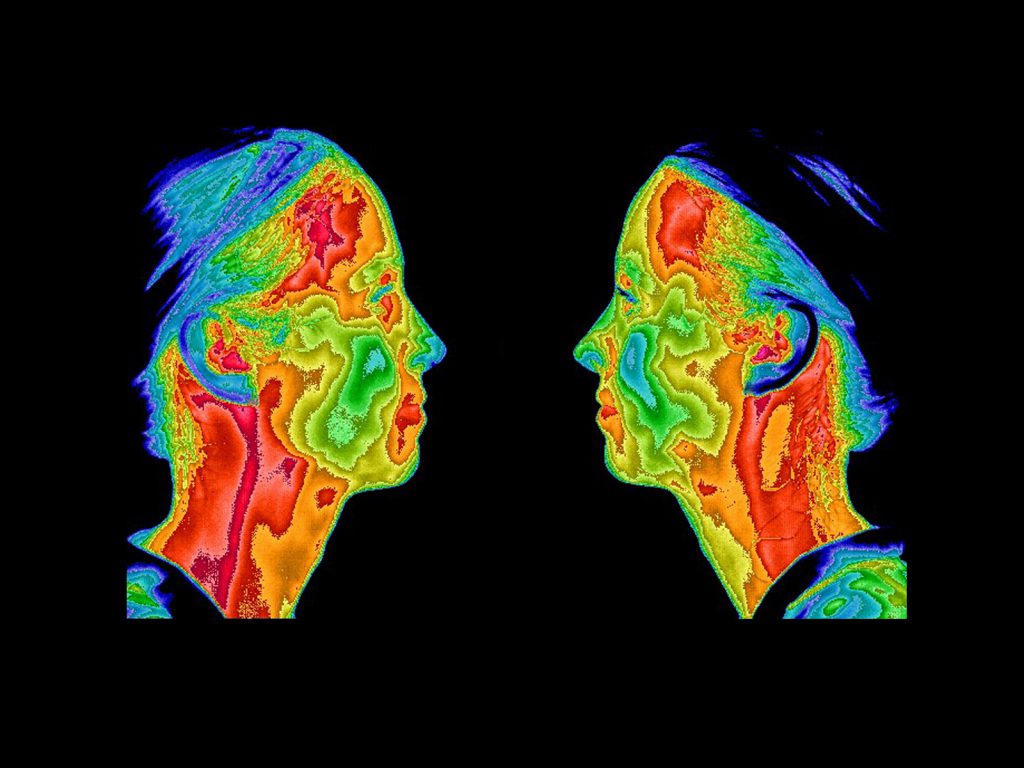
Lower Body Thermography in San Marcos, CA
Pain, inflammation, nerve irritation, and circulation-related changes can sometimes affect the lower body without providing an obvious explanation. Clinical thermography offers a way to document the body’s surface heat patterns and provide additional physiological information that may help a healthcare provider evaluate an area of concern.
At View of Health Thermography, our lower body thermography in San Marcos uses computerized medical infrared imaging to capture thermal patterns across the lower back, spine, buttocks, legs, knees, and feet. The examination is non-contact and does not use ionizing radiation.
What Is Lower Body Thermography?
Unlike X-rays, CT scans, MRI, and ultrasound, which primarily provide structural information, thermography is a physiological imaging technology. It detects infrared energy naturally emitted from the body’s surface and produces a thermal image that can be evaluated for temperature patterns and differences.
A lower body thermogram in San Marcos, CA can provide information about thermal patterns associated with the body’s neurological, vascular, musculoskeletal, and inflammatory processes. This information may be useful when considered together with symptoms, medical history, physical examination, and other appropriate testing.
Thermography is an adjunctive imaging procedure. It is not intended to replace diagnostic testing or provide a diagnosis by itself.

What Areas Are Examined?
A lower-body examination allows the imaging system to capture thermal information from several areas of the lower body. Depending on the examination, these areas include:
- Lower back and spine
- Buttocks
- Legs
- Knees
- Feet
Comparing thermal patterns between corresponding areas of the left and right sides can provide additional information for professional interpretation. The images may also be stored so that future examinations can be compared over time. VOH Thermography describes its computerized imaging system as capable of producing high-resolution thermal images that can be analyzed both qualitatively and quantitatively.
When Can Lower Body Thermography Be Useful?
Lower-body thermal imaging may be considered when a patient or healthcare provider is evaluating concerns involving pain, inflammation, nerve-related symptoms, muscular conditions, or other problems that may have associated infrared thermal patterns.
VOH’s body thermography information discusses applications involving chronic pain, altered gait, muscle and ligament injuries, nerve irritation or entrapment, neuropathy, osteoarthritis, disc-related conditions, sacroiliac problems, and other musculoskeletal or neurovascular concerns.
Thermography may also have applications in sports-injury management. According to VOH, thermal imaging may help identify signs associated with inflammation and can be used as part of monitoring during injury recovery or when assessing whether an athlete may be ready to return to activity.
A Comfortable, Non-Invasive Examination
One reason patients choose a lower body thermogram in San Marcos, CA, is that the examination does not require injections, needles, compression, or contact with the body. The infrared camera detects heat remotely.
Before imaging, patients are asked to follow specific preparation instructions. Once at the clinic, patients are given time to acclimate to the controlled room environment. This helps establish a stable temperature state before the images are taken.
The thermal images are captured in real time using a sensitive medical infrared camera and transferred to a computer for storage and analysis. A board-certified clinical thermologist processes and analyzes the images, with a written report provided following the examination.
Understanding Your Thermal Images
Thermal imaging records surface temperature patterns rather than creating pictures of internal structures. An unusual thermal pattern does not, by itself, identify the underlying cause of a symptom.
For this reason, results should be considered alongside a patient’s history, physical examination, and other diagnostic procedures when appropriate. VOH specifically notes that body thermography cannot be used as a general body scan for internal cancers or internal organ pathologies.
Schedule Lower Body Thermography in San Marcos
View of Health Thermography has provided computerized thermal imaging services in San Marcos since 2012. The clinic uses specialized medical infrared imaging equipment and professional interpretation to provide patients with additional physiological information that may support their healthcare evaluation.
If you are considering lower body thermography in San Marcos, contact us to learn more about the examination, preparation requirements, and whether lower-body thermal imaging is appropriate for your needs.
Frequently Asked Questions
Lower body thermography captures infrared images of the lower back, spine, buttocks, legs, knees, and feet.
It records surface temperature patterns across the lower body that may provide additional physiological information for professional evaluation.
No. The examination is non-contact, painless, and radiation-free, with thermal images captured remotely using an infrared camera.
The examination can include the lower back, spine, buttocks, legs, knees, and feet, depending on the selected service.
No. Thermography is an adjunctive procedure and should be considered alongside clinical examinations and other appropriate diagnostic testing.